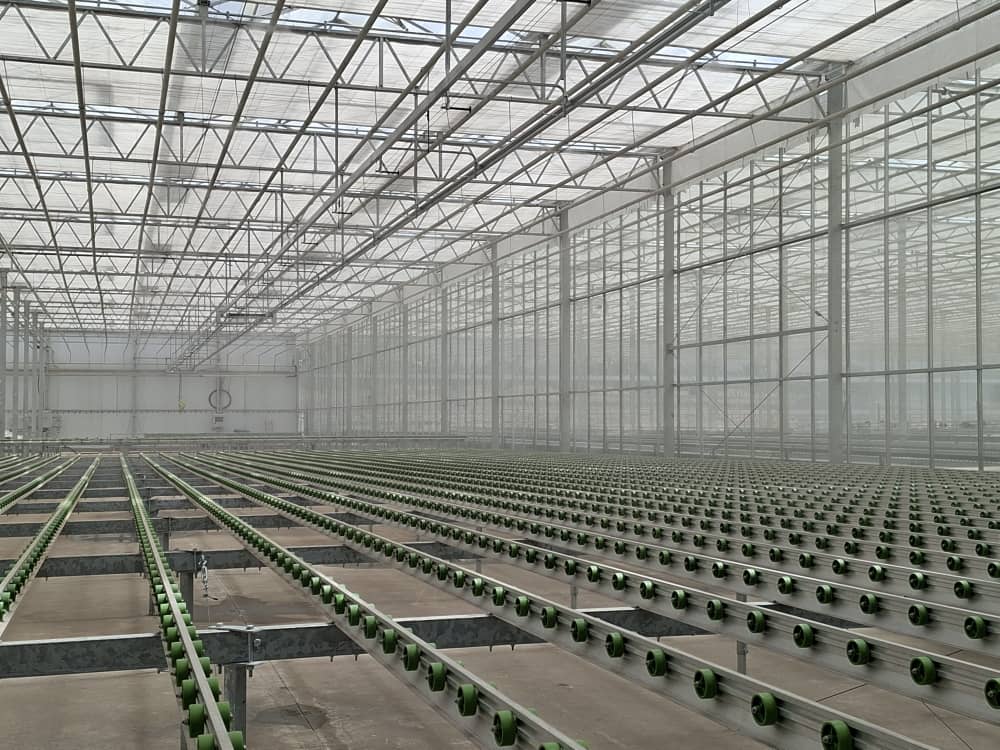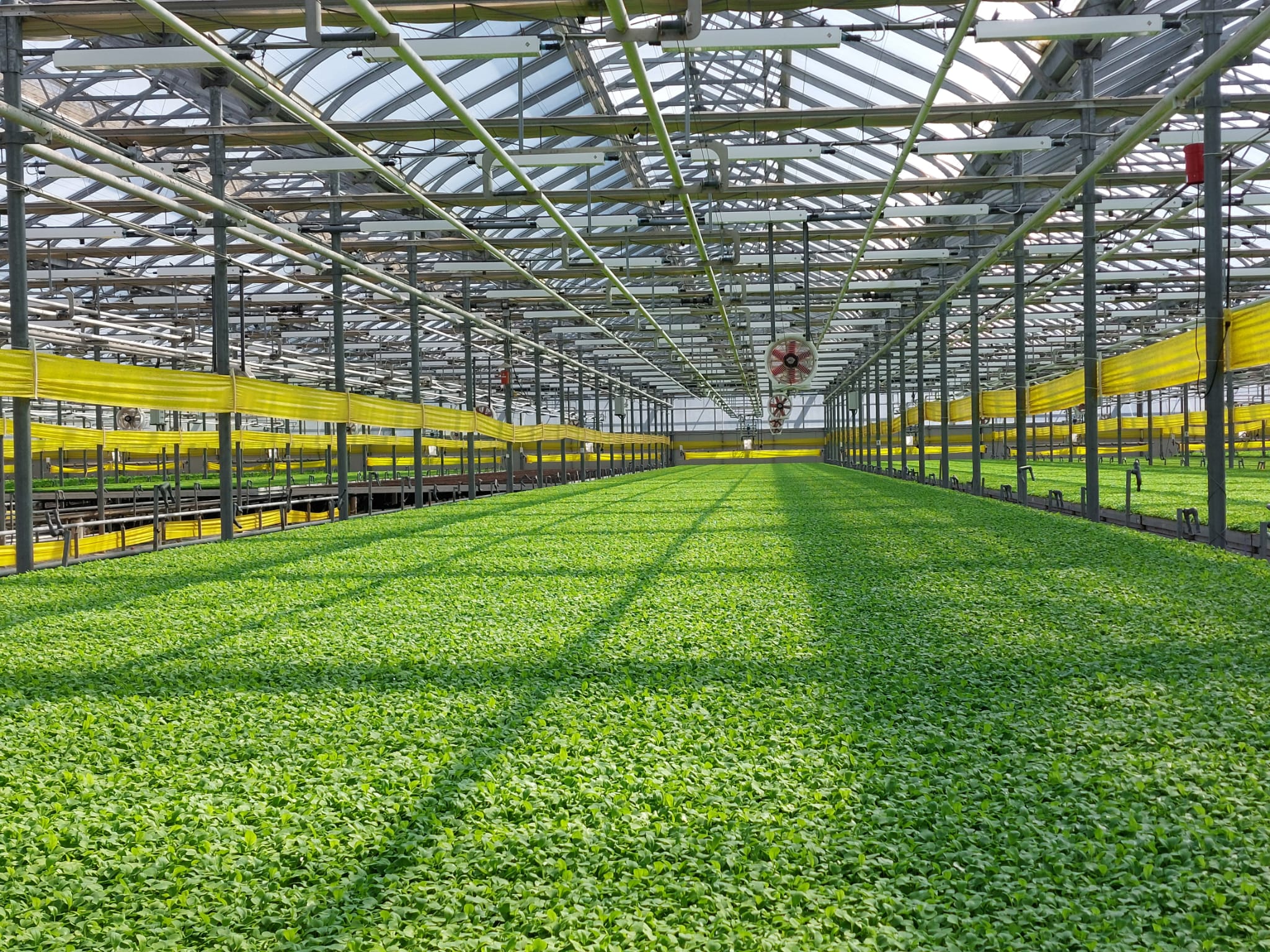
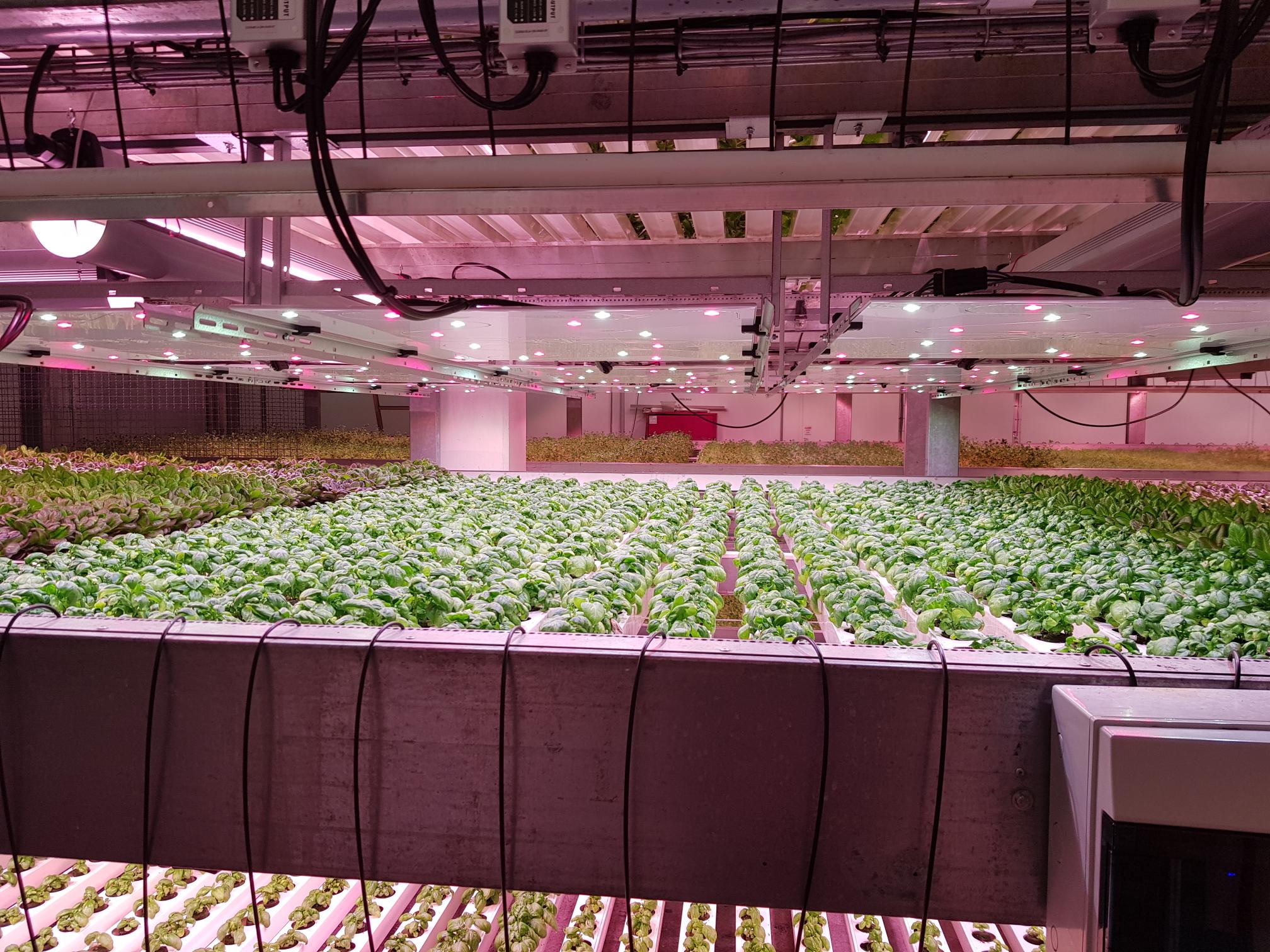
As winter approaches and the days become shorter, artificial lighting becomes an essential tool for growers operating in (CEA) facilities. Reduced natural light availability challenges the production of leafy greens, making artificial lighting not just beneficial, but fundamental for maintaining optimal crop development, consistent yields, and premium product quality.
Agranom has extensive experience cultivating leafy greens during winter under both natural light only and full supplemental lighting scenarios. This dual experience offers valuable insight into the advantages, limitations, and technical parameters of artificial lighting systems. In this article, we examine the role of artificial lighting in detail, covering benefits, challenges, technical specifications, and practical strategies growers can implement to balance energy costs and yield performance throughout the winter months.
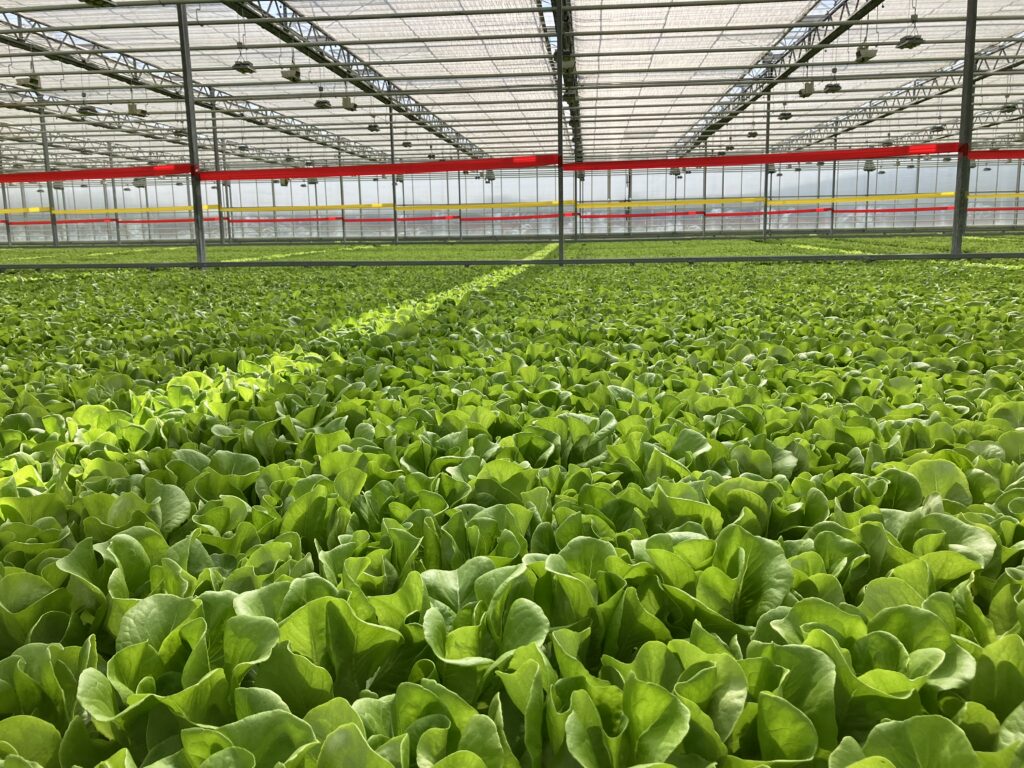
The role of artificial lighting in leafy greens production
In leafy greens cultivation, two production goals are consistently prioritized:
- Maximizing photosynthesis to enhance growth rates and yield.
- Steering plant morphology, including color, leaf shape, structure, and texture, to create an appealing final product for the target market.
During spring and summer, natural light typically satisfies these requirements. However, in northern climates during autumn and winter, day length becomes insufficient. To compensate, growers must extend natural daylength and supplement overall light levels. This is achieved through the use of artificial lighting systems such as High-Pressure Sodium (HPS) fixtures or modern LED installations, both of which are widely used in commercial leafy-green production.
Besides simply extending the day, artificial lighting provides growers the ability to:
- Control daily light integral (DLI), measured in mol/m²/day.
- Maintain consistent photosynthetic activity.
- Influence leaf pigmentation, particularly important for red-leaf varieties.
- Adjust plant structure and density.
- Improve overall quality and market shelf appeal.
Radiation intensity, both from natural sunlight and artificial sources, also plays a defining role in determining leaf thickness, firmness, and resilience.
Daylength extension: Practical approaches and considerations
Daylength extension is a core strategy in winter production. Commercial operations typically use one of two methods:
- Turning on artificial lighting before natural sunrise
- Continuing artificial lighting after sunset until the desired photoperiod is achieved.
Regardless of the method, avoiding abrupt light transitions is essential. Sudden changes can shock the plant, causing stomata to respond poorly and reducing photosynthetic efficiency. Instead, growers should implement gradual, stepwise increases and decreases in light intensity.
A typical ramp-up schedule may look like:
- 20% intensity for the first 15 minutes
- 50% for the next 15 minutes
- 75% for the next 15 minutes
- 100% during the final 15 minutes of the first hour
Similarly, light should ramp down gradually at the end of the day to mimic natural sunset conditions. This gentle transition allows stomata to open or close progressively, stabilizing transpiration rates and reducing physiological stress.
Common lighting targets for leafy greens
- Daylength: 14–18 hours
- Light intensity: 120–180 µmol/m²/s
- Daily light integral (DLI): 8–16 mol/m²/day
Artificial light spectra and their impact on plant morphology
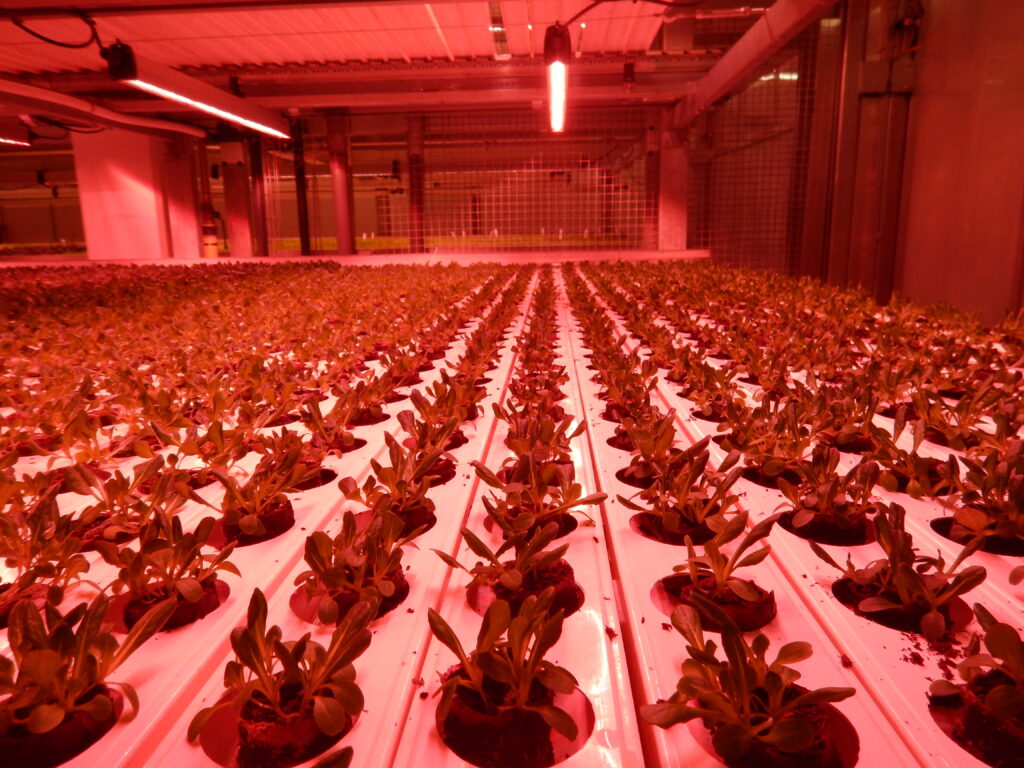
LED technology has revolutionized CEA by offering full control over spectral composition. Unlike HPS fixtures, LEDs allow growers to mix different light colors and tailor them to the specific physiological needs of various lettuce types.
A commonly used spectrum for leafy greens includes:
- 5% blue light
- 5% green light
- 90% red light
However, this is only a baseline. The optimal spectrum differs depending on the variety and desired product characteristics.
How specific light colors influence growth
- Blue Light: Promotes compactness and strengthens leaf structure. It enhances chlorophyll formation and encourages shorter internodes, resulting in denser heads.
- Red Light: Drives photosynthesis efficiently and increases biomass production. Red light is the primary component in most leafy-green lighting recipes.
- Green Light: Penetrates deeper into the canopy and supports uniform growth in lower leaves.
- Far-Red Light: Promotes leaf expansion by elongating leaf cells. While beneficial for some products, excessive far-red may produce overly stretched plants.
Red lettuce vs. green lettuce light needs
Red-leaf varieties require targeted light recipes to enhance pigmentation. Research shows that combining the correct spectrum with low-iron greenhouse glass significantly improves color intensity, making the product more attractive on the shelf.
The influence of radiation on leaf structure
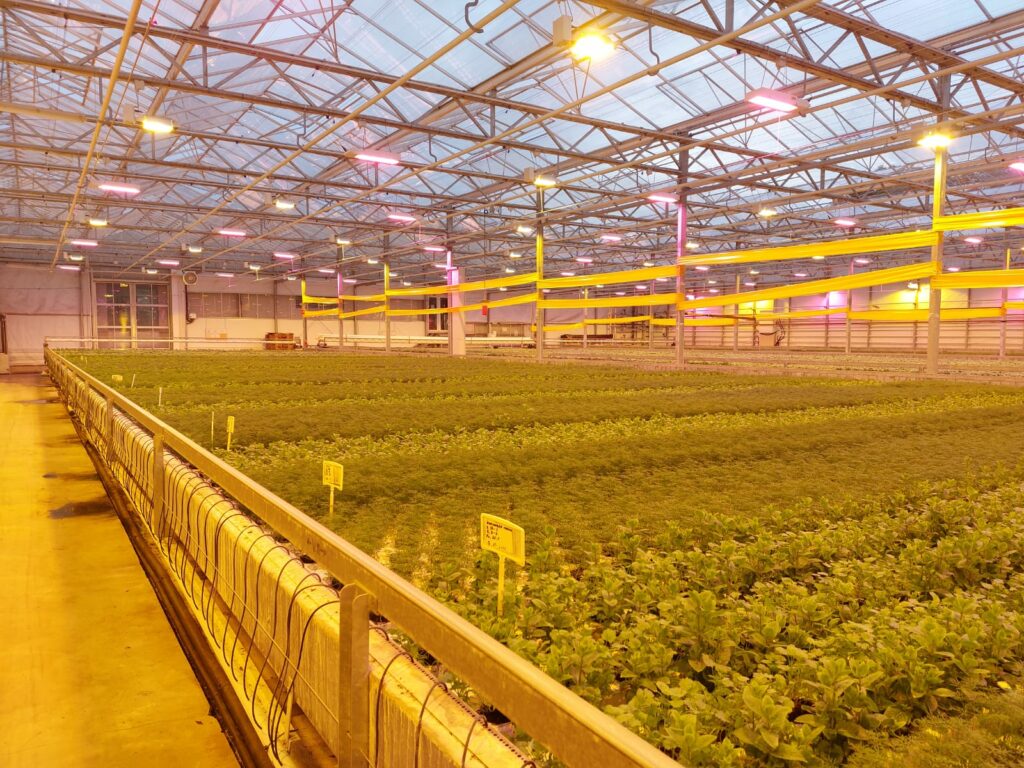
Radiation levels significantly impact the physical structure of lettuce leaves. High radiation (whether from sunlight or HPS fixtures) produces:
- Thicker leaves
- Stronger structure
- A more durable, slightly leathery texture
These traits are often desirable in retail markets where customers want heads that maintain freshness and structure after purchase.
LEDs alone cannot replicate the full spectrum of solar radiation or the radiative heat produced by HPS systems. This limitation has led to the development of hybrid lighting systems, which combine both LEDs and HPS lights in a single facility.
Advantages of hybrid systems
- Higher radiation levels are ideal for lettuce, basil, and other high-light herbs
- Improved winter performance in northern climates
- Additional heat from HPS, reducing the need for separate heating
- Balanced spectra and intensity
Golden rule of light and yield
A widely accepted rule in horticulture states:
“1% extra light = 1% extra production, when used properly.”
This principle highlights the importance of maintaining optimal light transmission in the greenhouse. To maximize light:
- Keep greenhouse roof glass clean (removing algae and dirt).
- Use anti-reflective (AR) coatings during periods with high natural light.
Even small improvements in light transmission can lead to meaningful increases in yield and revenue.
Understanding light and energy measurements
- Light intensity: Watt/m²
- Light sum: Joule/cm²
- Micromol: μmol/m²/s
- Mol: mol/m²/day
LED vs. HPS: Pros and Cons
LED Fixtures
- High efficacy (≈ 3 μmol/J)
- Long lifespan (30,000–50,000 hours)
- Fully controllable intensity and beam angle
- Wide spectrum customization options
- Spectrum may shift with chip temperature
HPS Fixtures
- Moderate efficacy (≈ 1.8 μmol/J)
- High light intensity and strong uniformity
- Common and proven supplemental light source
- Spectrum shifts during warm-up and dimming
- Produces high radiant heat
- Can increase transpiration and enhance product quality
Both systems offer advantages depending on the crop type, climate, and production strategy. Hybrid systems often combine the strengths of both technologies.
Concluding remarks
Selecting the right lighting strategies, technologies, and spectral combinations is integral to producing high-quality leafy greens with high photosynthetic efficiency and market appeal. Balancing energy input with yield output is essential for long-term profitability, particularly in winter conditions.
Agranom brings seven years of hands-on experience in leafy-green CEA production and supports growers in making strategic, technical decisions tailored to their specific crops, facility design, and business goals.
At Agranom, we specialize in CEA leafy greens and herb projects, offering a complete and integrated approach, from facility design and climate strategy to crop selection, operational support, and commercial planning. Our goal is to ensure that each project achieves long-term success, both agronomically and financially.
For more information or expert support on product selection, lighting strategy, or full cultivation consulting, please contact denis.laci@agranom.nl or visit www.agranom.nl.