Choosing the right growing media for hydroponic leafy greens
One of the most important and often confusing decisions in hydroponic leafy greens cultivation is the selection of the right growing media. The chosen material, structure, and quality have a direct impact on plant performance, root development, and final product quality.
Key parameters such as water-holding capacity, oxygen availability, nutrient buffering, and substrate volume all play a critical role in successful cultivation. Substrate size, in particular affects root stability and humidity buffering, helping protect the crop during warmer periods.
At the same time, choosing the right growing media is challenging. Hydroponic leafy greens production is still a relatively young cultivation method compared to high-wire crops, and reliable long-term data is limited. In addition, substrate suppliers continue to introduce new and “more sustainable” alternatives, which can add further complexity to the decision-making process.
In this article, Agranom provides a professional overview of the most commonly used commercial substrates for hydroponic lettuce and herb cultivation. We also share our practical recommendations based on experience.
Most common commercial growing media
1. Loose peatmoss (potted substrate)
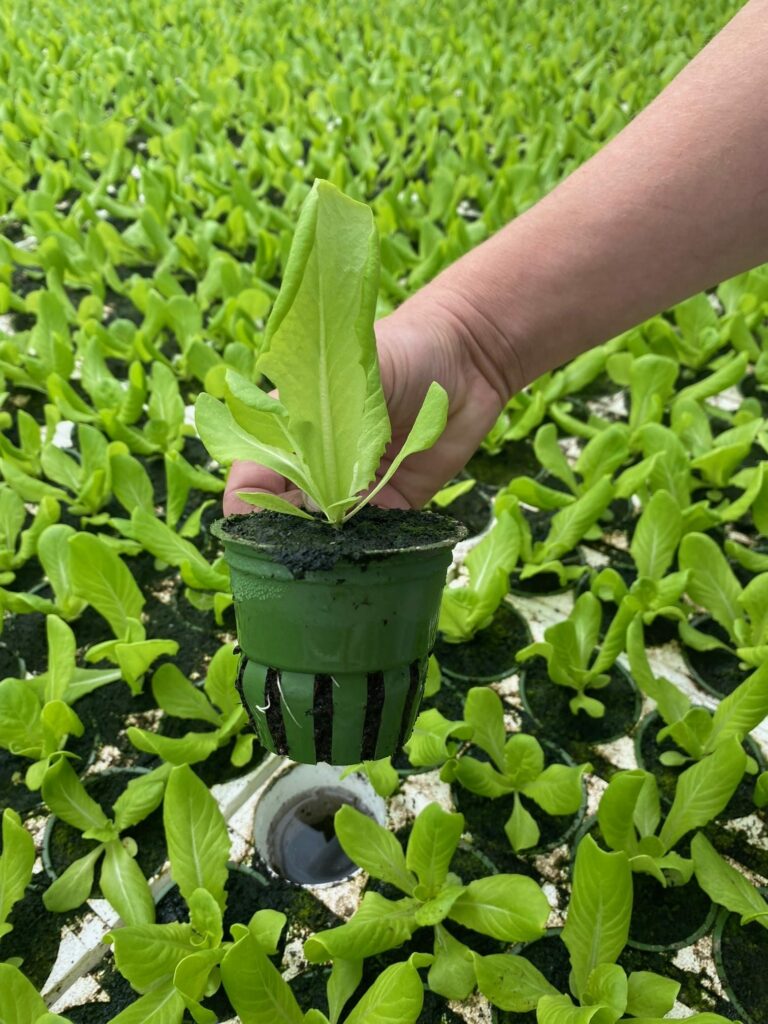
Loose, fresh peatmoss remains the most widely used growing media in high-tech CEA facilities. It is typically delivered in large bulk bags and potted on-site into paper, biodegradable, or plastic pots.
Potting is commonly done using systems such as Ellepot, Jiffy, or Growcoon. Substrate recipes can be tailored and sourced locally to reduce transport costs. Pot sizes are fully customizable, with a 4.5 × 5 cm pot generally sufficient for a 200–250 g lettuce head. Larger or smaller products require adjusted pot sizes accordingly.
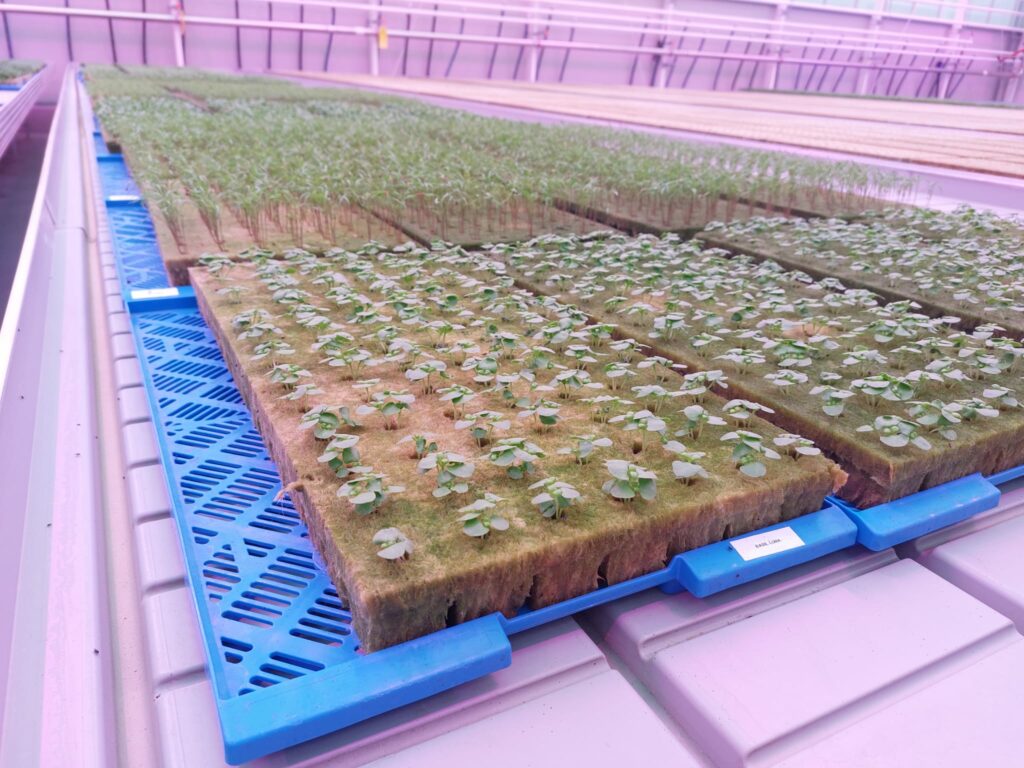
2. Stonewool (rockwool)
Stonewool is the second most common substrate used worldwide and is supplied by several manufacturers, with Grodan being the most prominent.
It is often chosen by growers aiming to reduce peat use and minimize organic debris in the system. However, lettuce roots are relatively sensitive, and non-natural materials can cause uneven root development, penetration difficulties, and reduced uniformity, especially during early growth stages.
3. Pressed peat blocks
Pressed peat blocks are widely used for full-head lettuce cultivation, particularly in Northern Europe. These blocks typically consist of a mix of white and black peat, compressed to a higher density and often pre-fertilized.
In many cases, propagators pre-seed these blocks and deliver them to growers around day 10, ready for direct transplanting into the final system. A wide range of block sizes and recipes are available, making this option highly adaptable to different production goals.
4. Alternative and sustainable media
In recent years, several alternative substrates have gained attention, largely driven by regional availability and sustainability goals. These include:
- Dried peatmoss glued plugs (e.g. Van der Knaap)
- Nygaia media (Klasmann-Deilmann), mainly used in indoor systems
- Oasis foam plugs, particularly popular in fully indoor facilities in the U.S. market
These media are used across various system types, including NFT gutters, open gutters, slab systems, DWC, and ebb & flow indoor setups.
Key criteria for media selection
There is no single solution that fits all systems or markets. Each growing media has its place. However, based on Agranom’s experience with leafy greens and herbs, the following criteria are essential:
- Natural material preference. Lettuce and herb roots are more sensitive than high-wire crops, making natural substrates more suitable.
- Appropriate density and structure. Roots must be able to penetrate the substrate easily, overly dense or thick materials can restrict development and slow growth.
- Absence of harmful components. Avoid substrates containing chemical glues, excessive dust, plastics, or other contaminants.
- Adequate water and nutrient buffering. Humidity retention and nutrient-holding capacity are critical for consistent performance.
Conclusion
Based on extensive practical experience and multiple comparative trials, Agranom concludes that fresh natural peatmoss-based substrates (pressed or loose) remain the most reliable choice for hydroponic lettuce and herb cultivation. These media consistently deliver plant uniformity, growth speed, and product quality compared to alternatives.
While innovation in substrate development continues, peat-based solutions currently provide the best balance between performance, reliability, humidity/ fertilizer capacity and root health for leafy greens in hydroponic systems.
At Agranom, we specialize in CEA leafy greens and herb projects, offering a complete and integrated approach, from facility design and climate strategy to crop selection, operational support, and commercial planning. Our goal is to ensure that each project achieves long-term success, both agronomically and financially.
For more information or expert support, please contact denis.laci@agranom.nl or visit www.agranom.nl.